
Let me tell you about the crown jewel of my Shelf of Shame.
It sits on the middle shelf, right between a "World's Best Grandma" mug I got when I was 22 and a bacon-scented soap that still haunts my cubicle memories. It's about ten inches long. It has a hard shell, a long tail, and beady little eyes that seem to follow you across the room. And clutched between its tiny taxidermied paws is a shot glass.
A taxidermied armadillo. Holding a shot glass.
Here's how it came into my life.
I found it at an estate sale in Independence, Missouri, about three years ago. The house belonged to a woman who'd clearly been a collector of… unusual things. The basement was a museum of the inexplicable. I paid eight dollars for it. Eight dollars and a lifetime of questions.
The woman running the sale told me it had been in the family for decades. Her grandfather had brought it back from a trip to Texas in the 1960s. No one knew why he bought it. No one knew why he kept it. And no one, in all those years, had ever used the shot glass.
This is what the Shelf of Shame is all about.
The Shelf of Shame isn't just a collection of bad gifts. It's a collection of evidence. Evidence that somewhere, someone looked at a dead armadillo with a shot glass and thought: "this is a good purchase." Evidence that the gap between "someone bought this" and "someone wants this" is sometimes wider than the Grand Canyon.
When I walk into an estate sale or a clearance rack and I see something like this armadillo, I don't just see a weird object. I see a gift buying psychology case study. I see the moment someone's brain overrode every sensible instinct and said "yes, this is the one."
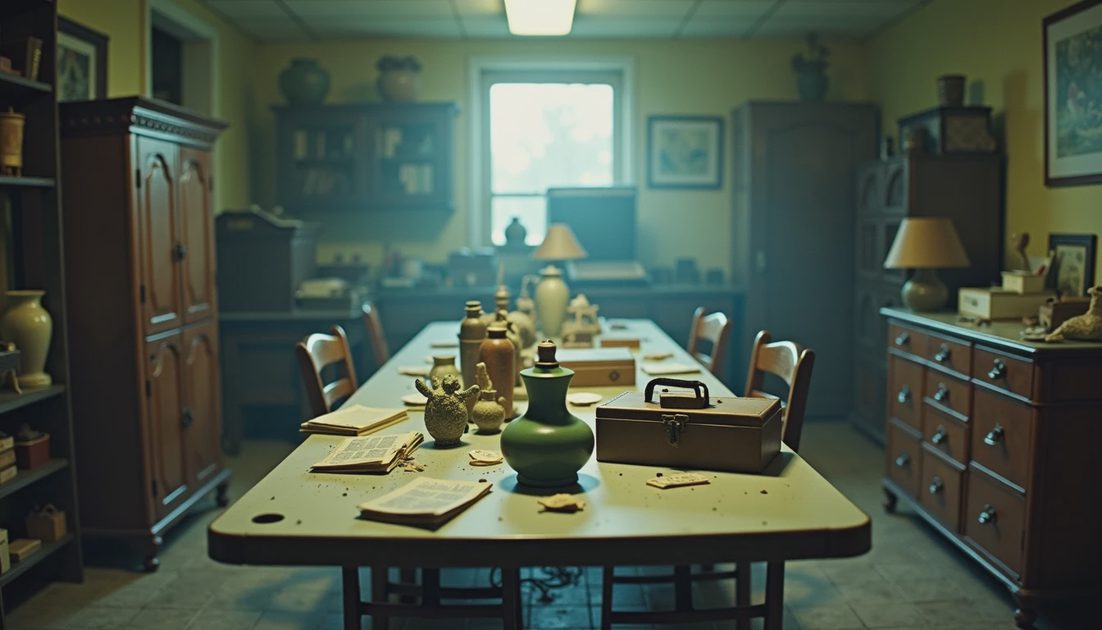
Here's the psychological breakdown of the armadillo purchase.
The person who bought this armadillo — probably the grandfather, probably in a Texas gift shop in the 1960s — committed what I call the "Novelty Trap." He wasn't looking for something useful. He wasn't looking for something beautiful. He was looking for something memorable. Something that would make people say "where did you get that?"
The problem is that memorable and meaningful are not the same thing. The armadillo is memorable. It's the first thing people notice when they walk into my office. But it doesn't mean anything to me. It doesn't say "I see you." It says "I saw this and I couldn't stop thinking about how weird it was."
That's a bad gift story waiting to happen. The novelty trap is why people buy singing fish plaques, bacon soap, and taxidermied animals holding drinkware. They want to be the person who gives the crazy gift. They want the story to be about them. And it is — just not the way they hope.
What should have been bought instead.
Eight dollars. 1960s Texas. A grandfather buying a gift for someone back home. Same budget, same era, same recipient. What should he have bought?
A piece of local pottery. A hand-painted serving dish. A set of postcards from the trip, framed. Anything that said "I was here and I thought of you" — not "I was here and I couldn't stop laughing at this armadillo."
The armadillo is not a gift. It's a conversation starter. And there's a difference. A conversation starter says "look at this crazy thing." A gift says "I know you." The armadillo knows nothing about anyone. It just sits there, holding its little glass, waiting for someone to ask.
The armadillo is still on my shelf.
I don't have the heart to get rid of it. It's become part of the office. Paul thinks it's hilarious. Tuna, the beagle, barked at it for three days when I first brought it home and now ignores it completely. The shot glass has never been used and never will be.
But it's a good reminder. A reminder that the novelty trap is always waiting. A reminder that just because something is unforgettable doesn't mean it's thoughtful. And a reminder that when I see something weird on a clearance rack, I should ask myself one question: "Am I buying this for them — or for the story I'll tell about it?"
The right gift says "I see you." The wrong one says "I saw this on sale."
But the taxidermied armadillo says something even stranger: "I saw this, I couldn't look away, and I spent money so I wouldn't have to be the only one who saw it."
If you're reading this and you've ever bought a novelty gift — ask yourself why. If the answer is "I thought it was funny," you might want to think again. Funny fades. Weird stays weird. And somewhere, it might end up on someone's Shelf of Shame.

No comments yet.